The Only Snorkel Gear Checklist You'll Ever Need
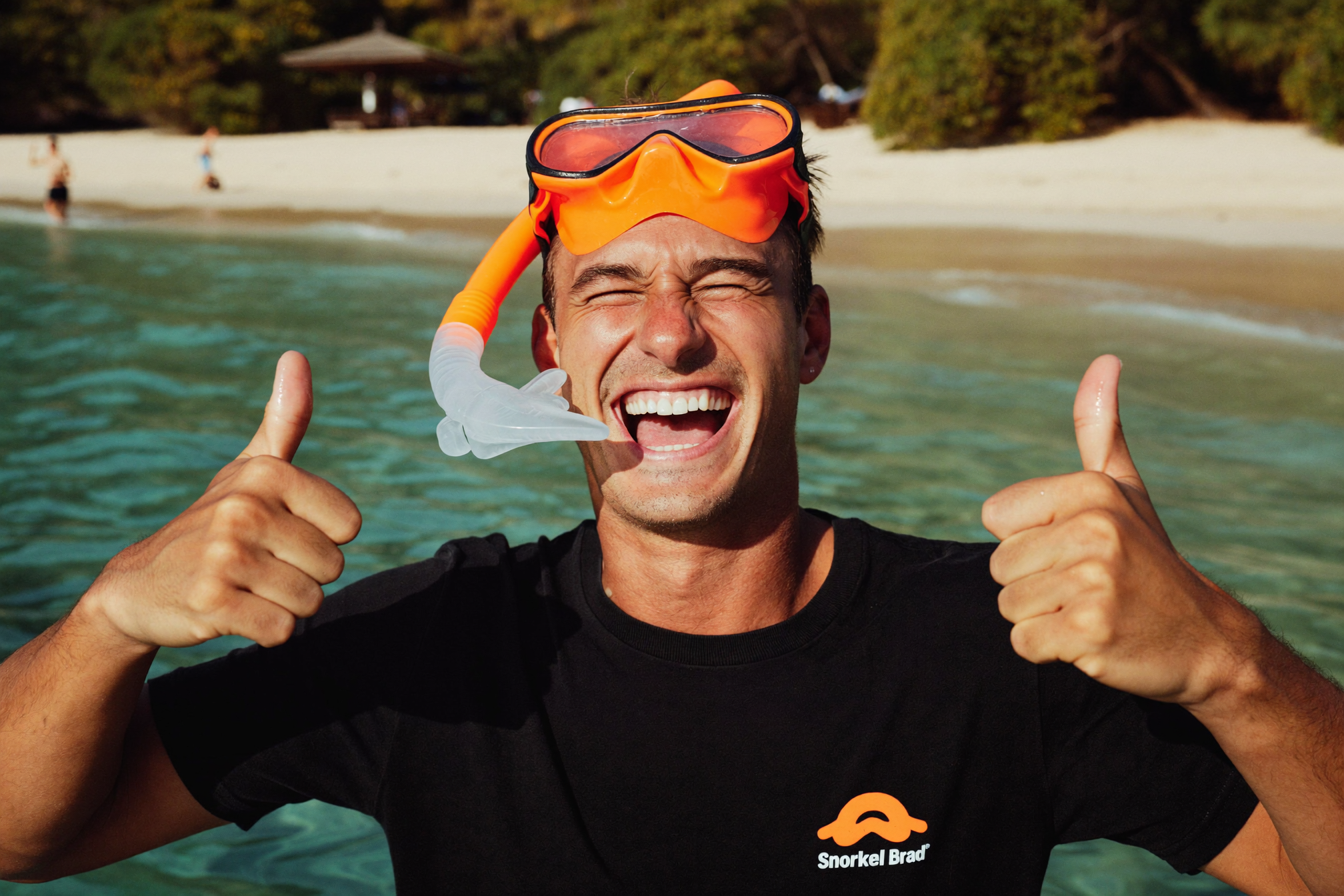 By Snorkel Brad
·Chief Diving Officer
·July 21, 2026
By Snorkel Brad
·Chief Diving Officer
·July 21, 2026
You do not need $400 of equipment to float face-down and look at a fish. You need six things, chosen well. Buy those six right and you'll never think about gear again. Buy them wrong and you'll spend your whole vacation adjusting a leaky mask. Here's the entire list, and how to pick each one.
1. The mask (the only thing that really matters)
Everything else is negotiable. The mask is not. A leaking, fogging, or ill-fitting mask ruins the whole day. The fit test: hold the mask to your face without the strap, breathe in gently through your nose, and let go. If it stays put on suction alone, it fits your face shape. Look for a soft silicone skirt (not stiff plastic), tempered glass lenses, and a low internal volume so it's easy to clear. Tinted or clear lens is personal taste; fit is not.
2. The snorkel — dry vs. classic
Three flavors, and the price gap is real:
Classic (open-top): just a tube. Cheap, reliable, nothing to break — but waves splash in and you'll clear it often. Great for freedivers and anyone who dips below the surface, since a dry valve traps air and fights you on the way down.
Semi-dry: a splash guard on top deflects surface chop while still letting you dive. The sweet spot for most beginners.
Dry snorkel: a float valve seals the top completely when you go under, so no water gets in. Fantastic for staying on the surface; slightly buoyant and awkward if you like to dive down. For a first-timer who plans to stay up top, a dry or semi-dry snorkel is worth the few extra dollars.
Follow Snorkel Brad
Terrible advice. Great vibes. New disasters weekly.
3. Fins that fit your feet and your travel bag
Fins turn frantic paddling into an effortless glide, and they save your energy for actually looking around. For snorkeling, skip the enormous free-diving blades — go medium-length and moderately stiff. Full-foot fins slip on bare and pack small, ideal for warm water and flights. Open-heel fins go over neoprene booties, better for cold water or rocky entries. Whatever you pick: snug but not toe-crushing. Cramping in the first ten minutes means they're too small or too stiff.
4. A rashguard (sun armor you'll actually wear)
Floating face-down bakes your back and legs for hours. A rashguard beats slathering on sunscreen every 40 minutes, protects the reef from runoff chemicals, and adds a little warmth and buoyancy for free. This is where we cheerfully plug ourselves: a ButtSnorkelers Classic Tee is a perfectly good topside cover-up, and The Trucker shades your face on the boat and the walk down. Look the part while the reef stays intact.
5. Defog (the two-dollar hero)
A cheap bottle of anti-fog gel is the highest-value item on this list. New masks have a factory film that fogs instantly; defog cuts it. Apply a drop to the dry inside lens, spread it, dip once to rinse. Baby shampoo works in a pinch, and yes, Brad swears by spit — it's free and it's always with you. Whatever you use, do it before you get in, not after the fog has already ruined the reef for you.
6. A mesh bag to carry the lot
Last piece: a mesh gear bag. It drains, it dries, sand falls straight through instead of grinding your mask lens, and it holds everything above in one grab-and-go bundle. Rinse your whole kit in fresh water after every use — salt is what actually kills snorkel gear — then let it air-dry in the bag out of direct sun.
That's the whole checklist: mask, snorkel, fins, rashguard, defog, mesh bag. Nail those six and you're set for years. Round out the look with a few stickers for the cooler, and grab the rest of the crew's colors over in the shop. Snorkel differently.