How to Breathe Through a Snorkel Calmly (The Whole Point, Really)
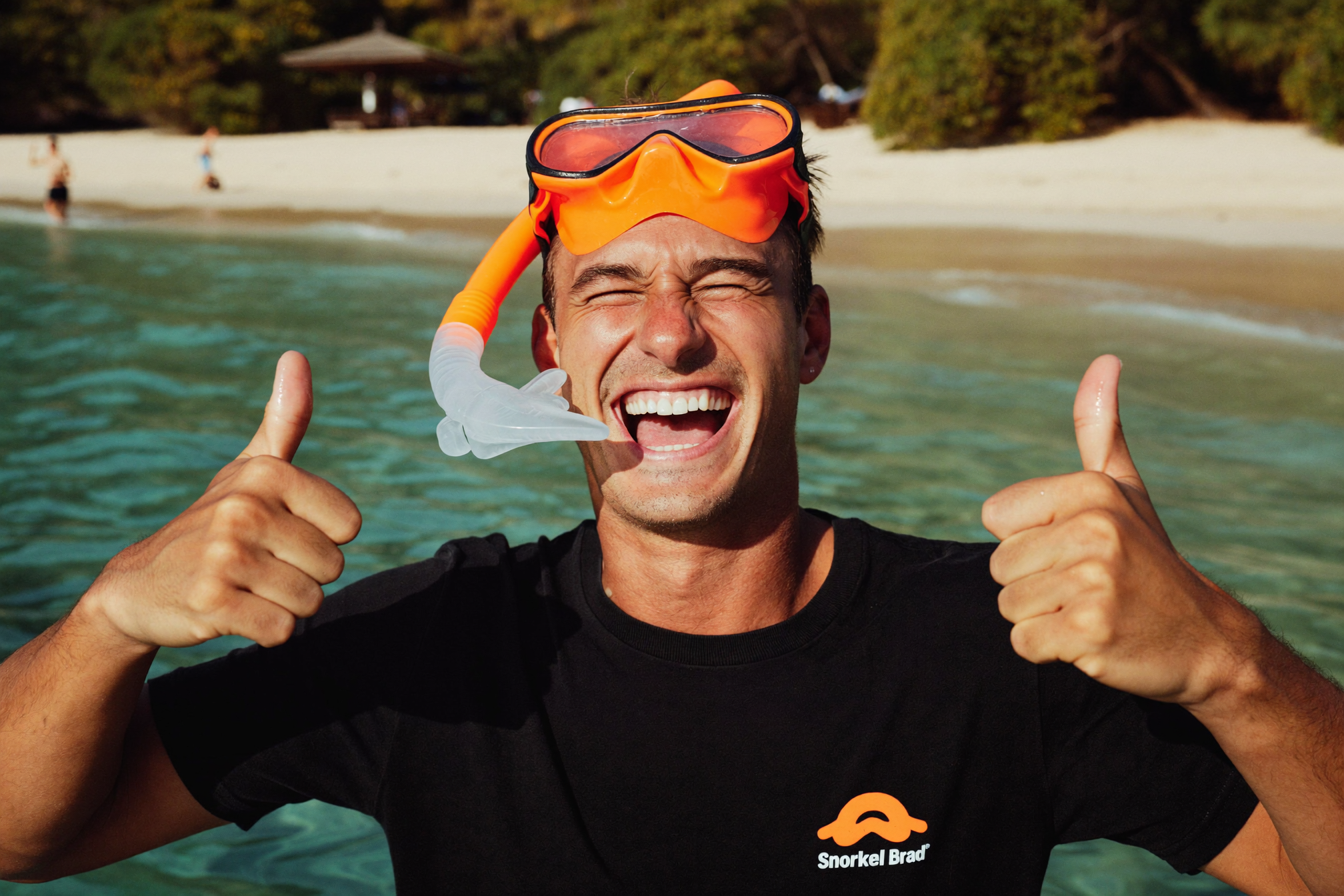 By Snorkel Brad
·Chief Diving Officer
·July 23, 2026
By Snorkel Brad
·Chief Diving Officer
·July 23, 2026
If you learn only one thing about snorkeling, learn to breathe calmly, because everything else, floating, clearing, diving, enjoying yourself, is built on top of it. New snorkelers almost always breathe too fast and too shallow, which makes them feel out of breath, which makes them breathe faster, which is a spiral Brad rode all the way to the ladder more than once. The fix is boring, gentle, and completely reliable.
Why breathing feels weird through a snorkel at first
Breathing through a tube is a genuinely new sensation, and your brain treats new sensations with suspicion. Two real things make early snorkel breathing feel harder than normal breathing. First, a snorkel adds a bit of length to your airway, and that extra tube holds a small amount of your just-exhaled air, so if you take fast shallow breaths you end up re-breathing some stale air and feel short of breath. Second, having your face in the water and your breathing routed through your mouth alone simply feels unfamiliar, and unfamiliar reads as alarming until you get used to it.
The good news is that both problems have the same solution: slow, deep breaths. A slow, full breath completely flushes the tube with fresh air and gives your body plenty of oxygen, while fast shallow panting does neither. Almost every beginner breathing problem is really a too-fast, too-shallow problem in disguise, and it dissolves the moment you deliberately slow down.
The calm-breathing technique
Here is exactly how to breathe well through a snorkel. It is simple on purpose:
- Breathe in slowly and deeply through your mouth, drawing a full, unhurried breath that fills your lungs properly. Think slow and smooth, not sharp and quick.
- Breathe out slowly and fully, pushing the air out completely so you clear the stale air from the tube and make room for a fresh breath.
- Pause naturally if it feels comfortable, letting your breathing settle into a relaxed, unforced rhythm rather than a frantic in-out-in-out.
- Keep your jaw relaxed around the mouthpiece. Do not clamp down; a gentle, loose grip is enough and prevents jaw fatigue.
The mantra is slow in, slow out, long and full. If you ever start to feel breathless, the answer is almost never to breathe faster; it is to consciously slow down and deepen your breathing until the feeling passes. This same calm control is what makes clearing your snorkel easy, because a calm breather does not gulp water in a panic.
Why slow and deep beats fast and shallow
It is worth understanding the physics, because it turns calm breathing from a vague instruction into something you trust. Every breath you take through a snorkel first has to move through the tube, and the tube always holds a fixed small volume of air. When you exhale, some of your used breath stays in that tube, and your next inhale pulls it back in before it reaches fresh air. This is called dead space, and it is completely normal.
With slow, deep breaths, each inhale is large enough that it easily overcomes that small stale volume and delivers plenty of fresh air to your lungs. With fast, shallow breaths, each inhale is so small that a big fraction of it is just re-breathed stale air from the tube, so you work hard and still feel starved for air. That is the whole trap. Breathing deeply is not just calmer psychologically; it is genuinely more efficient given how a snorkel works. Slow down and you literally get more oxygen per breath for less effort.
Practice drills on land and in shallow water
You can build calm breathing before you are floating over anything, which makes it far easier when you get there:
- The dry-land drill. Sitting comfortably, put in just the snorkel, hold your nose or wear the mask, and practice slow deep breaths through the tube until it feels completely normal and boring.
- The face-in-the-sink or shallow drill. In very shallow water where you can stand, lower your face and breathe slowly through the snorkel while staying relaxed. Standing means you can lift your head anytime, which removes fear.
- The count drill. Breathe in for a slow count and out for a slow count, keeping the two even. Counting occupies your mind and naturally slows your pace.
Do these until snorkel breathing feels as unremarkable as breathing through your nose on the couch. Confidence here is what lets you relax everywhere else, and relaxed breathing is the foundation of floating and relaxing in the water.
Stopping the panic spiral
Panic is the real enemy of snorkeling, and it almost always starts with breathing. It goes like this: you feel a little breathless, so you breathe faster, which makes you more breathless, which frightens you, which speeds your breathing further. Left alone, that loop can escalate quickly. The way to break it is to interrupt it early and deliberately.
The instant you notice yourself speeding up or tensing, do three things: stop moving, lift your head or roll onto your back so your face is out of the water if you need to, and take several long, slow, deliberate breaths until your body settles. There is no rule that says your face must stay down. Floating on your back and breathing normal air for a minute is always available and resets everything. Knowing this escape hatch exists is itself calming, because you are never trapped. Most classic beginner mistakes trace back to letting this spiral run instead of pausing to breathe, so catching it early is the highest-value habit you can build.
Little habits that keep you relaxed
Beyond the breathing itself, a few small habits keep your whole system calm and stop breathlessness before it starts:
- Move slowly. Snorkeling is not a race. Gentle, lazy fin kicks use far less oxygen than thrashing, so slow movement keeps your breathing easy.
- Start in calm, easy conditions. Flat, warm, clear water lets you focus on breathing without fighting waves or cold, both of which speed your breathing up.
- Do not overgrip the mouthpiece. A clenched jaw creates tension that spreads, so keep it loose.
- Rest whenever you like. Roll onto your back, float, and breathe air anytime you want a break. Frequent, unbothered rests keep the whole outing relaxed.
Put it all together and calm breathing stops being something you think about and becomes simply how you are in the water. That is the goal, and it is genuinely achievable in a session or two of gentle practice. Brad got there eventually, mostly by finally believing that slower was better, which, for a self-appointed Chief Diving Officer, took an embarrassingly long time.
Snorkel Brad refuses to get in the water underdressed. Gear up with The Classic Tee and the Hydrate Before You Dive bottle, or browse the full collection — Brad's commission is, as always, exactly zero dollars.
Snorkel Brad Answers Your Questions
How should I breathe through a snorkel?
Breathe slowly and deeply through your mouth, taking full unhurried breaths in and pushing the air fully out. Slow, deep breaths flush the tube with fresh air and give you plenty of oxygen, while fast shallow breaths leave you feeling starved for air.
Why do I feel out of breath when snorkeling?
Usually because you are breathing too fast and too shallow, so you re-breathe stale air trapped in the tube's dead space. Consciously slow down and deepen each breath, and the breathless feeling almost always resolves.
What do I do if I start to panic in the water?
Stop moving, lift your head or roll onto your back so your face is out of the water, and take several long, slow, deliberate breaths until you settle. You can always float on your back and breathe normal air; you are never trapped.
Should I breathe through my nose or mouth with a snorkel?
Through your mouth only. The mask covers your nose to keep water out, so all your breathing goes through the mouthpiece. Breathing out through your nose fogs the mask and lets water in, so keep it to the mouth.